

Distilling a new crop
A trial on growing agave for commercial use in the Barossa Valley is breaking new ground at Sandy Creek.

By Matt Webster
A trial on growing agave for commercial use in the Barossa Valley is breaking new ground at Sandy Creek.
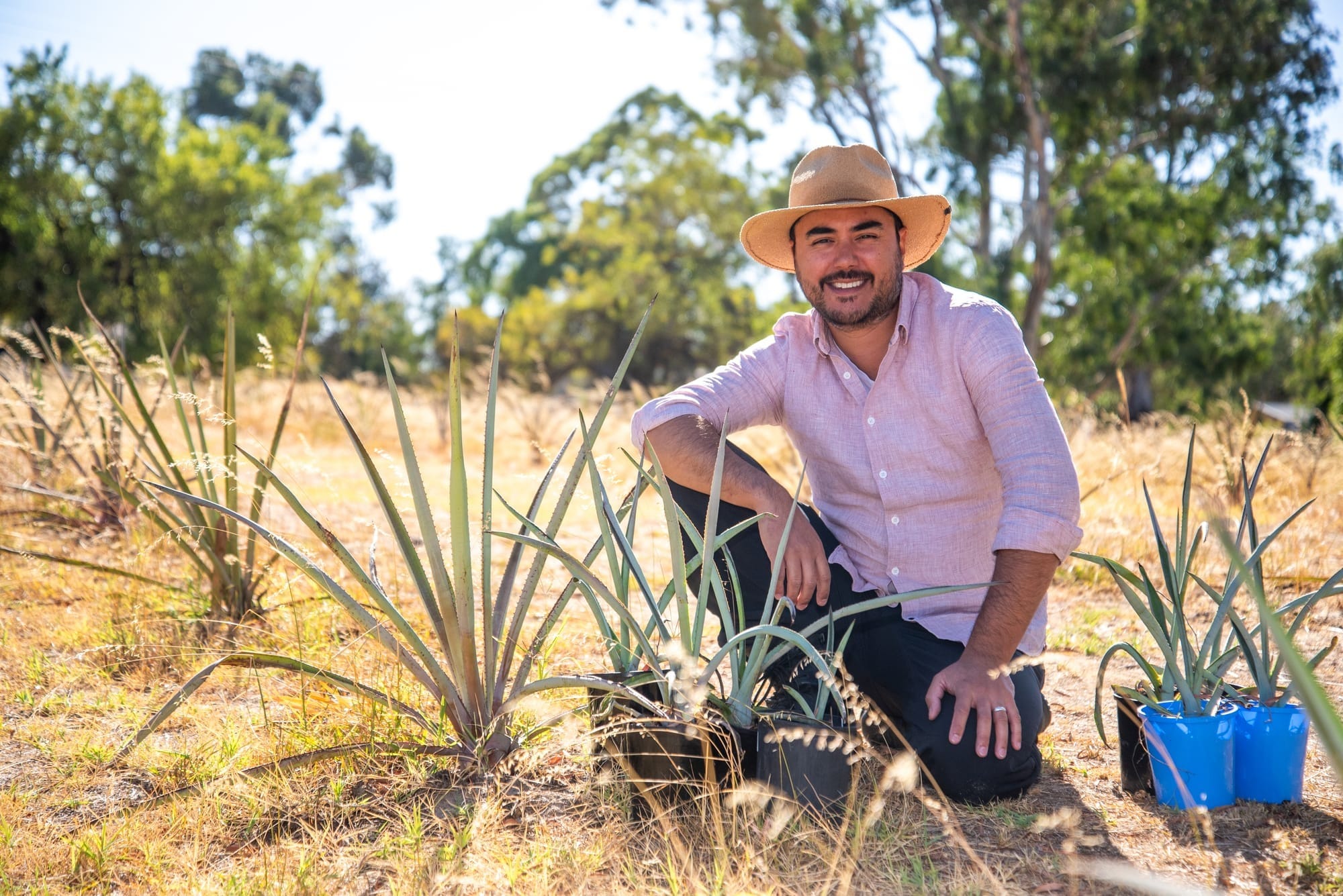
With a crop of nearly 1,000 agave plants in the ground, Justin Conceicao from Luna Brewing and Distilling is expanding on a trial that began with just a handful of plants.
On his property near Sandy Creek, his agave plantation is a rare attempt to grow this unique species commercially in the Barossa region, with the long-term goal of producing a locally grown tequila-style spirit.
While still in the early stages, he explained that his early trials have indicated that agave could potentially be grown successfully on a large scale in the region.
"In the middle of last year, I had 10 agave tequilana in a greenhouse," Justin said.
"Now we've got about 300-odd out here and twice that out the back, so call it about a thousand agave in the ground."
Most of the plants are blue Weber agave which is traditionally used to produce tequila.
"These are all tequilanas, which are the ones they use to make tequila…," he said.
Justin has also planted a small amount of other agave varieties, including agave angustifolia, which is commonly used in mezcal production.
Having already faced some extreme conditions over summer, Justin said he is now monitoring how the plants fair across the different seasons of the Barossa climate.
Soon after planting, heatwaves in November pushed temperature above 40 degrees and extreme heat affected some of the young plants before their root systems had time to establish.
"They hadn't been established for very long before we got the heat waves," Justin said.
"They didn't have the root system, it's just a couple of inches deep. Some fell over and they go very, very crispy," he said jokingly.
He said agave plants are generally resilient and despite the harsh conditions, they have since become established.
"Anecdotally from other growers, yes, they're pretty resilient, but you do have to watch out for frost," he said.
"I've had some that I thought were completely dead… and suddenly they came back to life."
The location has its challenges, and as the name suggests, Sandy Creek has sandy soil.
This means Justin has to contend with a very well-draining soil and limited natural nutrients.
"We're on a couple of metres of river sand essentially," Justin said.
"It's sand, river stones, and somewhere down there there's a bit of red clay. Really well draining – great – but very little nutrition."
A series of soil tests undertaken before planting, revealed that adding minerals such as boron and magnesium could help improve soil conditions.
Because the soil drains so quickly, Justin said maintaining soil nutrition and focusing on irrigation would be an ongoing task, especially for a young crop.
"I think that will be a constant process because the soil is so free draining," he said.
The plants continue to be hand-watered while Justin works on plans for a more permanent irrigation system.
Drip irrigation lines and soil moisture monitoring are expected to be installed later this year to better manage water across the property.
Justin said he is also observing how the agave interacts with the surrounding environment, with the crop already attracting attention from local wildlife such as rabbits, kangaroos and birds.
"I've had the rabbits come out and have a nibble. I've had the kangaroos come out and have a look too," he said.
Cockatoos have also been digging through the soil around the plants in search of roots and insects.
Justin said the ecosystem developing around the plants could play an important role in the future fermentation process.
"When you ferment, I want to use wild yeast," he said.
"That's where creating a bit of a natural biome around this becomes important."
He is considering planting additional native vegetation and flowering plants around the paddocks to encourage insects, birds and other wildlife that contribute to the local microbial environment.
Although his agave plants are in the ground, it will likely take several years before Justin will be able to harvest his first crop.
They take several years to mature before harvest, when the central core, known as the "piña", is removed and processed to make spirits.
"You chop all the leaves off and that's what you've got as your starting point for roasting and crushing," Justin explained.
Beyond tending to his crop, Justin also shares his observations and experiences with other members of the Australian Agave Association.
The association is made up of fellow agave growers in McLaren Vale, Adelaide Hills, Riverland and researchers at Adelaide University.
The association aims to raise the profile of Australian agave by gathering localised data to inform farmers looking to diversify their crops with drought tolerant options like agave.
"The Association aims to build a strong, sustainable agave industry and raise awareness about this versatile, hardy plant," he said.


