'Copper-tunities' await at Kapunda
Nearly 600 delegates gathered in Adelaide this week for Australia’s premier copper conference, Copper to the World 2026 – with a Kapunda project being a focal point of the event.


Nearly 600 delegates gathered in Adelaide this week for Australia’s premier copper conference, Copper to the World 2026 – with a Kapunda project being a focal point of the event.
EnviroCopper, which has one of its projects operating out of Kapunda, had its managing director, Leon Faulkner, speak at the conference earlier this week.
With electronic technology now a part of our daily lives more than ever before, the resources used to power it are in high demand – hence, The Leader recently returned to EnviroCopper at Kapunda, to learn about progress on its method of low-impact copper recovery.
As previously reported, EnviroCopper is researching and exploring a method of mining known as InSitu Recovery (ISR) to recover copper and gold deposits which are unable to be mined conventionally, due to hydrogeology, economics and social factors.
Unlike traditional, open-pit mining, ISR drills wells or bores down to the metal deposits, before pumping a benign solution (with a pH comparable to Coca-Cola or lemon juice) into the ground to dissolve the remaining copper from its ore body.
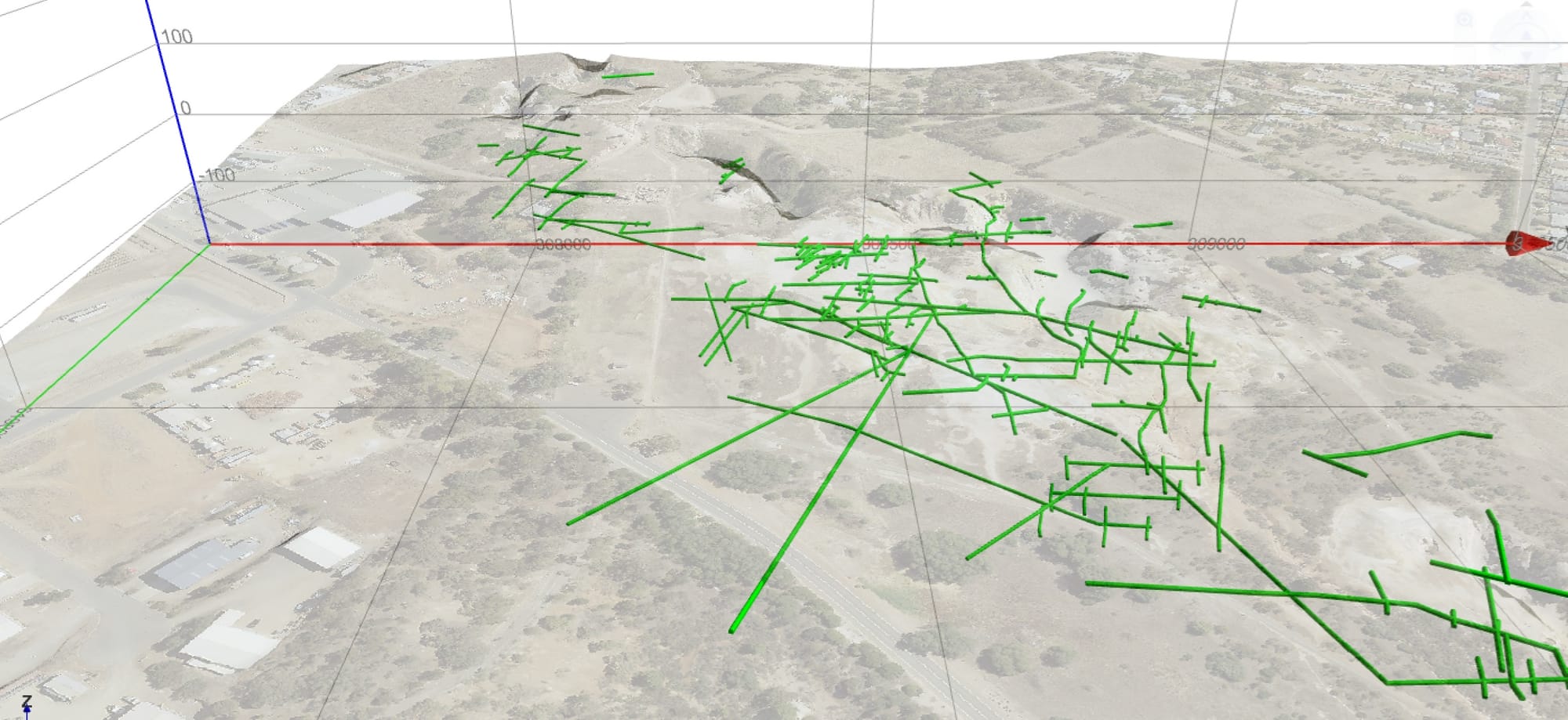
Philippa and Leon Faulkner of EnviroCopper said that at the Kapunda site alone there is estimated to be some 119,000 tonnes of copper, a medium-sized amount compared with massive open pit mines.
While in the past, many tonnes of rock would need to be cleared to access these deposits, the pair explains that the ISR method has very minimal impact.
In June 2025, EnviroCopper had been granted approval to begin its first 90 day exploration trial, which in the ensuing months, was extended as needed.
As Executive and Managing Director, Leon Faulkner explained, the process “took a little bit longer than we expected.”
“It’s taken longer for the copper to come into solution…but it’s coming to solution now so we’ve got copper, cobalt, nickel and zinc into solution out there, which we’re happy about,” Leon said.
Business Manager and Stakeholder Engagement Lead, Philippa Faulkner, explained how before the team can go into copper production, there are more approvals and assessments to be done.
“With the results that we’re doing now, this year, then we go to the government to apply for a mining lease application,” Philippa said.
“That is another big step up. We’ve already started that discussion with the department, and when that happens, there’s a lot more community engagement required for how the mine will look, how it’ll impact the existing mine site, how it will impact people that want to access it, dogwalkers and the locals who live around it.”
At this stage, they say it will most likely be about three years before they can go into copper production, looking at around mid-2029 to have all the necessary checks and assessments complete.
However, alongside the resources, Philippa and Leon also speak of the opportunities such a project could develop for the town – from prospects of industrial and heritage tourism operations, as well as jobs that would be based in the town too.
Speaking ahead of last week’s Copper to the World Conference, Minister for Energy and Mining, Tom Koutsantonis MP said there was no better place for such an event than in South Australia, especially as copper becomes a more important resource in the years to come.
“South Australia has the resources, projects, expertise and investment opportunities needed to help power that future,” Minister Koutsantonis said.
“Copper has played a central role in South Australia's economic story for more than 180 years, from the discoveries that earned the colony the title of "Australia's Copper Kingdom" through to the world-class operations and emerging projects driving growth today.
“Copper to the World brings global attention to our state and provides a valuable opportunity to showcase why South Australia is one of the world's most attractive jurisdictions for copper investment and development.”